
Broodstock / Care sheets / Chicken
Chicken Care Sheet
Gallus gallus domesticus, the domestic chicken
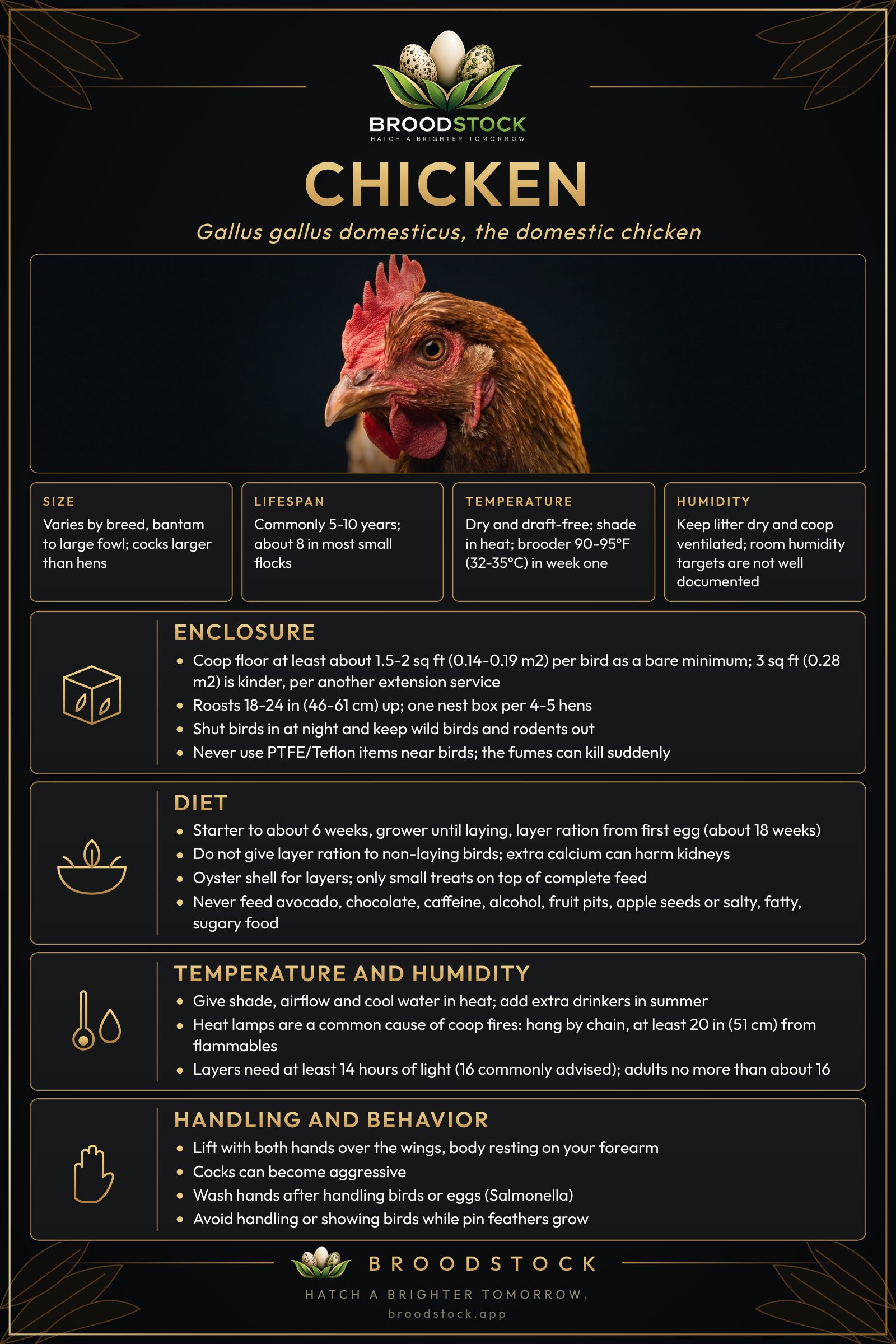
Print it or save it
The care sheet is a one-page summary you can print or keep on your phone. The full care text is below.
Keeping Chicken? Broodstock tracks feeding, weights, sheds, enclosures and equipment for every animal you keep, and it is free to start.
Scientific name
The domestic chicken is Gallus gallus domesticus. There are hundreds of breeds and bantam forms. These notes are written for backyard flocks rather than commercial production.
Adult size
Size depends heavily on breed, ranging from small bantams to heavy large-fowl types. A chick weighs about 1.3 oz (37 g) at hatching. By 35 days a commercial broiler may reach about 4 lb (1.8 kg), whereas a heritage bird of that age weighs about 2.3 lb (1.05 kg). In every breed the cocks outweigh the hens.
Lifespan
Most chickens live about 5-10 years, and about 8 is typical in small flocks. Some reach 12-15. Guinness World Records recognised a hen named Peanut as the oldest chicken, and she died in late 2023 at about 21 years. Egg output drops each year, and commercial-type hybrids fall off after their first year or two of laying.
Enclosure
Provide a secure, dry, well-ventilated coop plus a fenced run. Indoor floor space of about 1.5-2 sq ft (0.14-0.19 m2) per adult bird is the bare minimum according to one extension guide. Another extension service advises at least 3 sq ft (0.28 m2), which is kinder, particularly for large breeds or birds shut in for long periods. Shut the birds in at night, because predator losses are common.
Set roosts 18-24 in (46-61 cm) off the floor and about 12 in (30 cm) apart, allowing 6-10 in (15-25 cm) of perch per bird. Nest boxes should be about 12 x 12 in (30 x 30 cm) and at least 18 in (46 cm) up, with one box per 4-5 hens and 2-3 in of dry shavings.
Keep wild birds, rodents and other livestock away from the pen and the feed to limit avian influenza and other disease. Never put adult birds straight in with an established flock; quarantine them first.
No PTFE/Teflon-coated item should ever be used near birds, including irons, heating elements, non-stick pans, drip pans and some heat lamps. Overheated PTFE releases fumes that can kill birds suddenly, even from another room.
Temperature
Adults cope with a wide outdoor range as long as they stay dry, out of drafts and out of the wind. In hot weather provide shade, airflow and plenty of cool water. A hen drinks about 0.05-0.08 gallon (0.2-0.3 L) daily in cool weather, and up to twice that when it is hot, so put out extra drinkers in summer. Chicks need brooder heat until they are well feathered.
Humidity
Keep the litter dry and the coop well ventilated, because wet litter, ammonia and condensation lead to respiratory disease and coccidiosis. Target humidity for backyard flocks is not well documented. Hens clean their feathers by dust bathing, so give them a dry place to do it.
UVB
A separate UVB need for chickens is not well documented. Birds with outdoor access get natural sunlight. Indoor birds depend on a complete commercial ration to supply vitamin D3.
Lighting
Laying hens need at least 14 hours of light daily, and 16 hours is the common recommendation. Adults should not get more than about 16 hours. If you want winter eggs, a timer can add morning light in fall and winter, but practices vary and many keepers let hens rest on natural light. Keep growing pullets to no more than about 14 hours so laying does not begin too early. It is day length, not a rooster, that triggers laying.
Heating
For the first week, hold the brooder at about 90-95°F (32-35°C) at chick level, using the warmer end in cold weather. Then lower it by about 5°F (3°C) each week until it reaches about 70°F (21°C) at about 5-6 weeks, or until the chicks are fully feathered (up to about 6 weeks in winter). Taking heat away too soon can cause respiratory trouble.
A single 250 W heat lamp covers about 50-75 chicks when hung about 1-1.5 ft (30-46 cm) above them. Hang it by a chain rather than its cord, and keep it at least 20 in (51 cm) from anything flammable. Heat lamps are a common cause of coop fires, so many keepers choose radiant heat plates instead.
Watch the chicks. Huddling under the heat means they are cold. Spreading to the edges and panting means it is too hot. Crowding to one side points to a draft.
No PTFE/Teflon-coated item should ever be used near birds, including irons, heating elements, non-stick pans, drip pans and some heat lamps. Overheated PTFE releases fumes that can kill birds suddenly, even from another room.
Diet
Chicks: feed a complete chick starter to about 6 weeks, at about 20-21% protein for layer and dual-purpose breeds and about 22-24% for meat breeds. Chicks that were not vaccinated for coccidiosis are commonly fed medicated starter (containing a coccidiostat such as amprolium) through the starter period. Do not give medicated starter to chicks vaccinated for coccidiosis, since it can block the vaccine; practices vary.
Pullets get grower at about 15-19% protein until laying starts. Layers move to layer ration at about 16-18% protein from the first egg (about 18 weeks onward). Do not give layer ration to birds that are not laying, because the extra calcium can harm the kidneys.
Do not dilute complete feed with scratch grain or scraps beyond small treats. Buy feed fresh at least every 2 months and allow 2-3 in (5-8 cm) of feeder space per bird.
Never give the flock avocado, chocolate, caffeine, alcohol, fruit pits or apple seeds, or human food that is salty, fatty or sugary.
Supplements
Laying hens, particularly older ones with thin shells, should have crushed oyster shell available free-choice next to the layer feed. Insoluble grit is only needed if birds eat whole grains or forage, and a complete crumble or pellet doesn't call for it. Vitamin and mineral additives are unnecessary on a complete ration.
Shedding
Hens molt every year, generally in fall or winter as days get shorter. They lose feathers and lay less or not at all for several weeks. Feed a higher-protein ration during the molt, and avoid handling or showing birds while pin feathers grow. Eggs tend to become fewer and shells thinner after each molt. Withholding feed to force a molt is a commercial practice and isn't recommended for backyard flocks.
Handling
Most breeds put up with gentle handling, especially when handled young. Lift a bird with both hands over its wings, then rest its body on your forearm with the legs held between your fingers. Cocks may turn aggressive. Wash your hands after handling because of Salmonella.
Brumation
Chickens need no true seasonal rest, though the yearly molt and short winter days serve as a natural break from laying. Hens rest when they follow natural day length. A broody hen stops laying while she sits and raises chicks.
Health signs to watch
Marek's disease (herpesvirus) spreads in feather dander and survives for months in dust and litter. Signs can show from about 3 weeks of age and are most common in growing birds a few months old. They include leg or wing paralysis (often one leg forward and one back), weight loss and tumors. Vaccinate chicks at hatch, which hatcheries offer, and keep vaccinated chicks apart from older birds while immunity builds. Vaccination stops the disease but not the infection, and nothing treats it once it appears.
Coccidiosis in young birds shows as bloody droppings and hunched chicks. Use medicated starter or vaccinated chicks, and keep litter dry. Avian influenza causes sudden deaths, breathing trouble, nasal discharge, poor appetite and fewer eggs. Separate sick birds and call your vet, state animal health official or the USDA line (1-866-536-7593). Report it, as it is a reportable disease.
Also watch for lead poisoning from old paint chips or contaminated soil near older buildings. Lead can pass into eggs too, so test the run soil if in doubt. Other problems include mites and lice, worms (check monthly), egg binding and vent prolapse, bumblefoot, sour or impacted crop, and predator injuries.
Biosecurity: quarantine new or returning show birds for at least 30 days, ideally 100 ft (30 m) away, and tend them last. Keep separate boots for the coop, change clothes after visiting ponds, hunting areas or other flocks, and keep wild birds and waterfowl away. Salmonella is a risk, so wash hands after handling birds, eggs or equipment.
Welfare
Meat hybrids that grow fast and are kept to adulthood can develop leg and heart problems. Do not overcrowd birds, since crowding brings feather pecking and cannibalism, and provide enough nest boxes. Avian influenza can force the depopulation of a whole flock, so biosecurity protects your birds and your neighbors.
Keep every animal's care in one place
Log feedings, weights and sheds, set reminders, and let Ranger, the built-in AI manager, help with the rest. Free to start, no card needed.