
Print it or save it
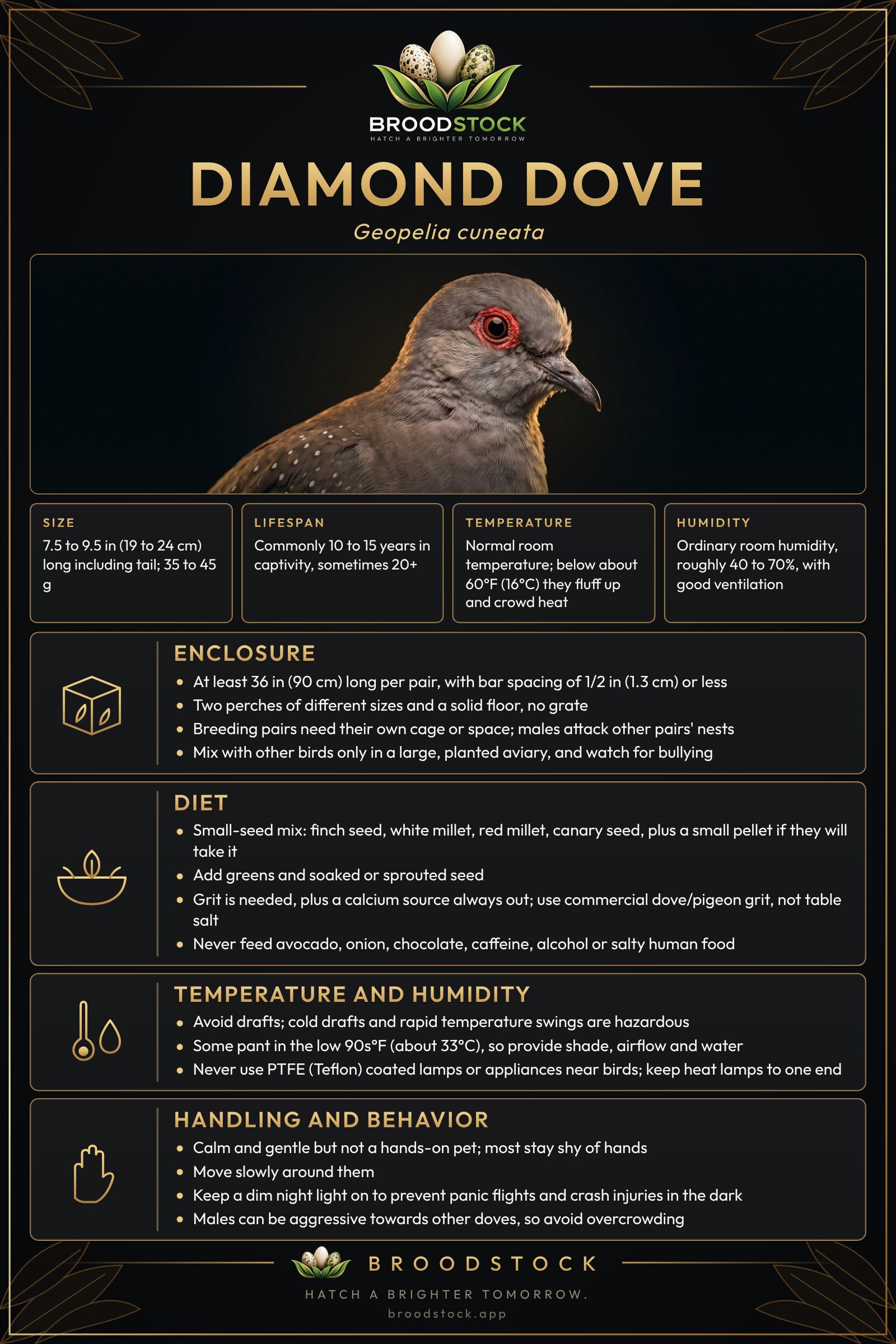
The care sheet is a one-page summary you can print or keep on your phone. The full care text is below.
Keeping Diamond Dove? Broodstock tracks feeding, weights, sheds, enclosures and equipment for every animal you keep, and it is free to start.
Scientific name
Geopelia cuneata
Adult size
Diamond doves measure about 7.5 to 9.5 in (19 to 24 cm) including the long tail, and weigh about 35 to 45 g.
Lifespan
In captivity 10 to 15 years is common and some reach 20+. Wild birds live 3 to 5 years.
Enclosure
Allow at least 36 in (90 cm) of length per pair, more if possible, since the doves fly back and forth and also walk the floor. Bar spacing should be 1/2 in (1.3 cm) or less, as young birds slip through wider bars. Provide two perches of different sizes and a solid floor (no grate).
Breeding pairs need their own cage or space, because males attack other pairs' nests. Keepers differ on mixed housing: some keep them peacefully with finches, budgies and cockatiels, while others report finches and canaries plucking them. Mix them only in a large, planted aviary and watch for bullying.
Temperature
Normal room temperature suits indoor doves; below about 60°F (16°C) they fluff up and crowd any heat source. Acclimated aviary birds tolerate summer heat over 100°F (38°C) and winter lows in the 40s°F (4 to 9°C) with shelter. Add heat when the temperature falls to the low 40s°F (about 5°C) or below, and protect unacclimated birds. Some pant once it reaches the low 90s°F (about 33°C), so provide shade, airflow and water then. Avoid drafts.
Humidity
Ordinary room humidity of roughly 40 to 70% is fine, with good ventilation. Keep the room clean and dust-free, and offer a shallow bath dish.
UVB
UVB is recommended. The best source is some unfiltered sunlight (about an hour a day) with shade available; window glass and screens block UV. Indoors, use a bird-specific UVB lamp at the maker's distance. Otherwise provide vitamin D3 through the diet, in pellets or a D3 supplement.
Lighting
Use natural day length or a timer for a steady day. A dim night light prevents night frights and crash injuries.
Heating
Room heat is usually unnecessary above about 60°F (16°C). If you use a heat lamp, restrict it to one end so birds can move away from it; the floor under a lamp can pass 110°F (43°C), which is too hot. Never use PTFE (Teflon) coated lamps or appliances near birds.
Diet
Feed a small-seed mix of finch seed and white millet (about half and half) with red millet and canary seed, plus a small pellet if they will accept it. Greens and soaked or sprouted seed round out the diet. Never give them avocado, onion, chocolate, caffeine, alcohol or salty human food.
Supplements
Grit is needed because doves grind seed in the gizzard. Always keep a calcium source available: oyster shell, crushed limestone, cuttlebone or baked eggshell, especially for laying hens. Vitamin D3 can come from sunlight, a vitamin with D3, or a mostly pelleted diet. Dove keepers often offer a mineral grit with a little fortified salt; use a commercial dove/pigeon grit for this and do not add table salt.
Shedding
This is not well documented for the species. Keepers usually see a single main molt each year, typically as days shorten.
Handling
Diamond doves are calm and gentle but not hands-on pets like parrots, and most stay shy of hands. Move slowly, and leave a night light on so a bird in the dark does not panic and fly.
Brumation
Doves need no seasonal rest. Pairs breed all year, and repeated laying drains calcium, which leads to egg binding and weak bones.
Health signs to watch
See an avian vet for: canker (trichomoniasis: yellow, cheesy growths in the mouth or throat, drooling, trouble swallowing, fast weight loss; parents pass it to squabs in crop milk, and it can kill in 8 to 10 days); egg binding (swollen vent, straining); calcium, vitamin A and D3 deficiency on seed-only diets; pigeon pox; psittacosis (chlamydia); parasites; labored breathing; and, in old birds, arthritis, cataracts and overgrown beaks or nails.
To prevent canker, clean waterers, baths and feeders often. General signs of illness are a fluffed and listless bird, slimy droppings and a sharp breastbone.
Welfare
Males can be aggressive towards other doves, so avoid overcrowding. One report says they can share with finches, budgies and cockatiels, which suggests mixed aviaries work if space is ample, but accounts differ. Hazards include cold drafts and quick temperature swings. Colour varieties (silver, peach, pied and others) exist, but no specific health problems have been confirmed for them.
Keep every animal's care in one place
Log feedings, weights and sheds, set reminders, and let Ranger, the built-in AI manager, help with the rest. Free to start, no card needed.