
Broodstock / Care sheets / Duck
Duck Care Sheet
Anas platyrhynchos domesticus, the domestic duck descended from the mallard (Pekin, Rouen, Runner, Khaki Campbell, Call, Cayuga and others)
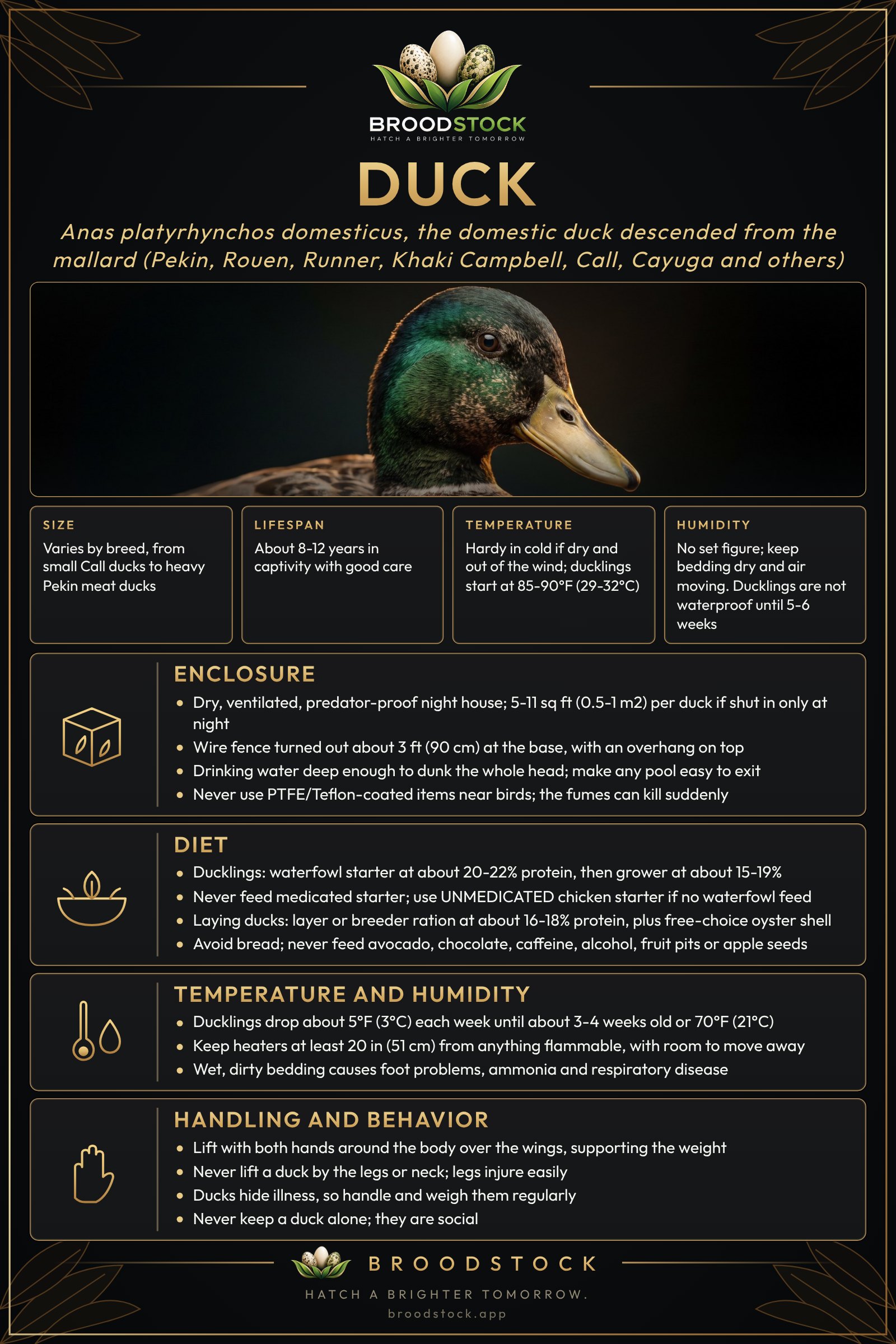
Print it or save it
The care sheet is a one-page summary you can print or keep on your phone. The full care text is below.
Keeping Duck? Broodstock tracks feeding, weights, sheds, enclosures and equipment for every animal you keep, and it is free to start.
Scientific name
Anas platyrhynchos domesticus, the domestic duck, which descends from the mallard. Breeds include Pekin, Rouen, Runner, Khaki Campbell, Call and Cayuga. Muscovy ducks (Cairina moschata) are a separate species and are not covered here.
Adult size
Size depends heavily on breed, running from small Call ducks up to heavy meat breeds like Pekin. No breed weights are available here, so look up the breed standard for your line.
Lifespan
With good care, ducks live about 8-12 years in captivity. Birds kept for production usually stay in the flock far fewer years.
Enclosure
Provide a dry, ventilated, predator-proof house for the night, because ducks are very vulnerable to predators after dark. In mild areas a three-sided shelter will do. Plan about 5-11 sq ft (0.5-1 m2) per duck when they are shut in only at night, and about 16-22 sq ft (1.5-2 m2) when they are housed through the day. One extension guide sets a minimum of 4 sq ft (0.37 m2) per meat duck. Fence with wire bent outward about 3 ft (90 cm) along the ground at the base, plus an overhang on top.
Ducks do not roost. Give deep, dry bedding and keep it clean, since ducks soak it quickly. Soft or bedded floors prevent bumblefoot better than hard or rough ones.
Drinking water must always be deep enough to dunk the whole head, which keeps eyes and nostrils clean. Swimming water is not needed for health but is enriching. If you add a pool, make exit easy with a ramp or shallow side, keep it clean, and remove lead fishing weights or old lead from ponds.
Never use PTFE/Teflon-coated items near birds: irons, heating elements, some heat lamps, drip pans and non-stick pans. The fumes from overheated PTFE can suddenly kill birds, even when the source is in another room.
Temperature
Adult ducks cope well with cold as long as they are dry, out of the wind and have unfrozen water. In heat, shade and water matter. Comfort ranges are not well documented. Ducklings need brooder heat until they are feathered.
Humidity
Ducks splash and soak their bedding, so ventilation and frequent bedding changes count for more than any humidity figure. Wet, dirty bedding leads to foot problems, ammonia and respiratory disease. Ducklings are not waterproof until they feather out at about 5-6 weeks, so they chill or drown easily when soaked.
UVB
A separate UVB need for ducks is not well documented. Birds with outdoor access get natural sunlight, and indoor birds depend on a complete ration for vitamin D3.
Lighting
Laying ducks do best on long days, and about 14-16 hours of light is common practice, though a lighting schedule for them is not given here. Young meat ducklings get continuous light for the first week, then at least 6 hours of unbroken darkness each day.
Heating
Start ducklings at about 85-90°F (29-32°C) in week one (a university guide says 85-90°F, while many hatcheries begin at 90°F). Then drop about 5°F (3°C) each week until they are about 3-4 weeks old or the brooder reaches about 70°F (21°C). Ducklings grow and feather faster than chicks, so heat is usually needed for less time. Use a chained, thermostat-controlled heater or heat plate at least 20 in (51 cm) from anything flammable, and leave room for them to move away. Keep the area around the heat dry, because ducklings splash.
Never use PTFE/Teflon-coated items near birds: irons, heating elements, some heat lamps, drip pans and non-stick pans. The fumes from overheated PTFE can suddenly kill birds, even when the source is in another room.
Diet
Feed ducklings waterfowl starter at about 20-22% protein for the first 2-3 weeks (meat-duck guides go up to 22-24%), then waterfowl grower at about 15-19% until laying or market. When no waterfowl feed is on hand, use an UNMEDICATED chicken starter. Never give waterfowl medicated starter. Laying ducks get a layer or breeder ration with about 16-18% protein.
Ducks need water with every mouthful to swallow, so keep water beside the feed. From about 2 weeks old, ducklings can also have greens, grass and insects. Bread and other human snacks should be avoided: they fill ducks up but give no nutrition, and may play a part in angel wing. Never feed avocado, chocolate, caffeine, alcohol, fruit pits, apple seeds, or salty, fatty or sugary human food.
Supplements
Ducks need far more niacin (vitamin B3) than chickens: about 55-70 mg per kg of feed, against about 30 mg/kg for chickens. Waterfowl feed is formulated for this, while chicken starter often is not. Deficiency causes bowed legs, swollen hocks and lameness. Many keepers stir brewer's yeast into chick starter for ducklings (no evidence-based dose is published here, so follow the product label), or use a poultry niacin product made for the purpose, following its label.
Laying ducks need a calcium source, such as oyster shell offered free-choice. Do not add other vitamin or mineral supplements to feed or drinking water unless a vet advises it.
Shedding
Ducks molt once or twice a year. After breeding, drakes go through an 'eclipse' molt and look hen-like, and laying slows during any molt. Exact molt timing in domestic breeds is not well documented.
Handling
Ducks hide illness, so regular handling and weighing help you catch problems early. Herd the duck slowly into a corner, then lift it with both hands around the body over the wings, supporting its weight from below. Never lift by the legs or neck, because legs are easily injured.
Brumation
No set rest period is needed. Laying slows in the short days of winter and during molt, which works as a natural break. How long hard-laying breeds should rest is not well documented.
Health signs to watch
Angel wing is a twist of the wing feathers outward at the wrist, often in one wing (usually the left), typically showing in the first 8 weeks in ducks. It is linked to rich, high-protein or high-energy diets, fast growth, crowding and lack of exercise. Fix the diet and wrap the wing early in its normal folded position with soft vet wrap (not tape on feathers), changing the wrap every 1-3 days, often for about 3-7 days or until the feathers grow in correctly. Once the bones harden, the bend is permanent.
Other problems to watch: niacin deficiency in ducklings (bowed legs, swollen hocks, limping); bumblefoot; respiratory infections; lead and other heavy metal poisoning (lead weights in ponds, old paint); botulism from stagnant water in hot weather (limp neck, paralysis); worms; egg binding and prolapse in heavy layers; overmated hens with bare necks and backs; and predator injuries.
Avian influenza: ducks can carry it with few signs, so keep them away from wild waterfowl. Sudden deaths or breathing trouble should go to your vet, your state animal health official or the USDA line (1-866-536-7593). Backyard ducks need no routine vaccines, and they do not need the Marek's vaccine. Fecal checks every 6-12 months are better than deworming everything routinely.
Welfare
Never give ducklings medicated chicken feed, and always check niacin, because deficiency cripples ducklings fast. To prevent angel wing, avoid high-protein, high-energy feeds and bread, and provide greens, space and exercise.
Crests on crested ducks are tied to skull and neurological defects, and some welfare-minded keepers avoid crested birds entirely (practices vary).
Ducks are messy and social. Never keep one alone, provide dry bedding and clean water every day, and keep the number of drakes per hen low to protect hens.
Keep every animal's care in one place
Log feedings, weights and sheds, set reminders, and let Ranger, the built-in AI manager, help with the rest. Free to start, no card needed.