
Broodstock / Care sheets / Mealworm
Mealworm Care Sheet
Tenebrio molitor (yellow mealworm beetle), a darkling beetle
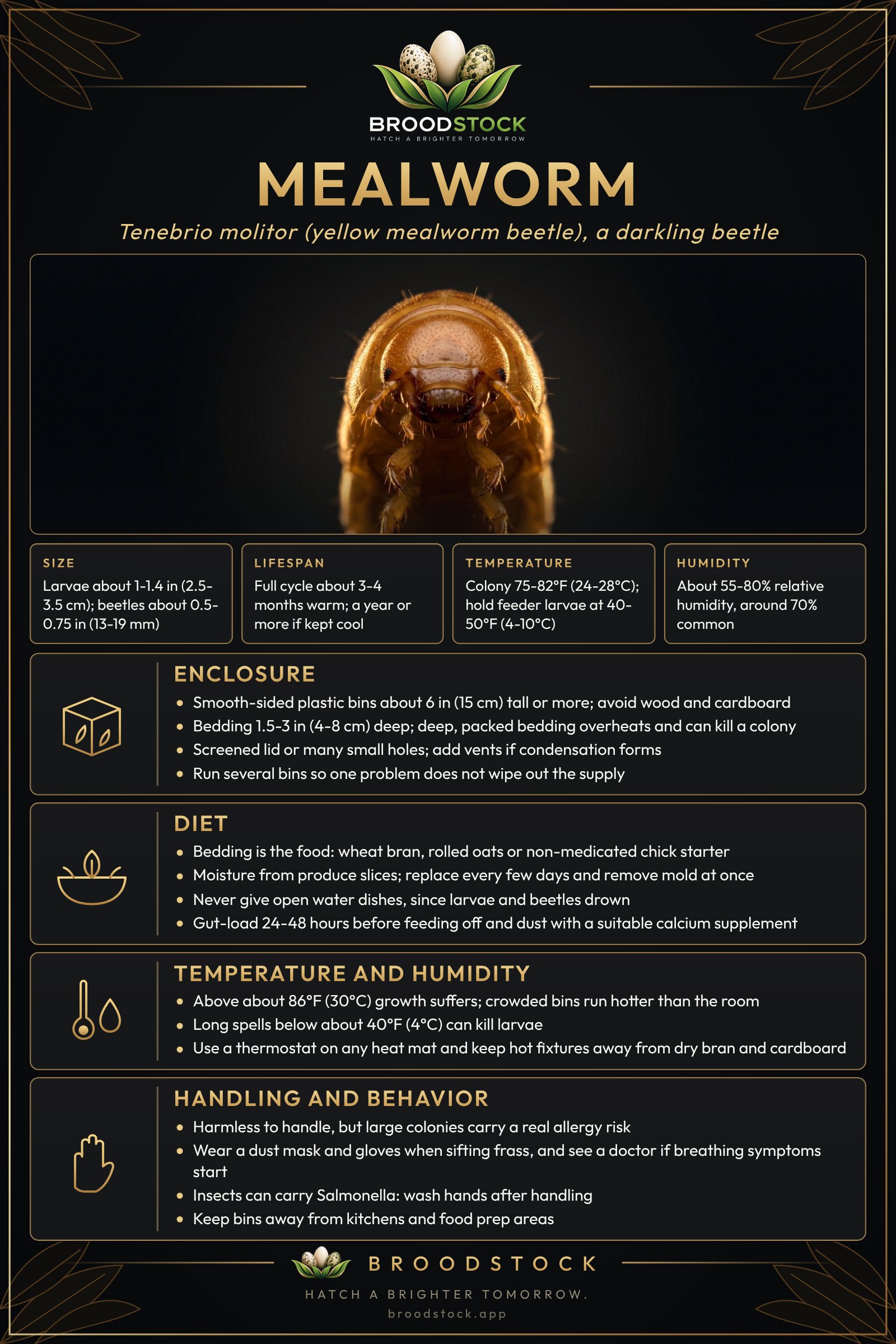
Print it or save it
The care sheet is a one-page summary you can print or keep on your phone. The full care text is below.
Keeping Mealworm? Broodstock tracks feeding, weights, sheds, enclosures and equipment for every animal you keep, and it is free to start.
Scientific name
Tenebrio molitor, the yellow mealworm beetle, is a darkling beetle, and the larva is the feeder. So-called "giant" mealworms are reportedly ordinary mealworms treated with an insect growth hormone that stops them pupating. Any beetles they produce are reported to be sterile, so do not use them as breeding stock. Superworms are a different species.
Adult size
Fully grown larvae measure about 1-1.4 in (2.5-3.5 cm). Beetles are about 0.5-0.75 in (13-19 mm), starting out white and turning black over a few days.
Lifespan
A full cycle takes about 3-4 months in a warm colony, and a year or more if kept cool. Eggs hatch in about 1-3 weeks. Larvae need roughly 10 weeks or more to grow, or up to 2 years in cold conditions. Pupae last about 1-3 weeks, and beetles live and lay for about 2-3 months.
Enclosure
Use smooth-sided plastic bins (storage tubs or similar) about 6 in (15 cm) tall or more; glass also works. Avoid wood and cardboard, because larvae chew and climb them. Keep bedding about 1.5-3 in (4-8 cm) deep. Deep bedding packed with worms overheats and can kill a colony. Leave at least 1 in (2.5 cm) of smooth wall above the bedding.
Fit a lid with a screen-covered cutout or many small holes. Add more vents if condensation forms, since stale damp air breeds mold and mites. Grain moths, mice and roaches are also kept out by the screen.
Run several bins (larvae, pupae, beetles, and bins of different ages) so one problem does not wipe out the whole supply. A large 64 qt (60 L) tub can hold tens of thousands of larvae.
Temperature
For growth and reproduction, keep the colony at about 75-82°F (24-28°C). Growth is fastest around 77-81°F (25-27°C). Above about 86°F (30°C), growth and pupation suffer, and crowded bins run hotter than the room. Below about 62°F (17°C), breeding nearly stops.
To hold feeder larvae, about 40-50°F (4-10°C) keeps them semi-dormant for weeks. Long spells below about 40°F (4°C) can kill them.
Humidity
Aim for roughly 55-80% relative humidity, with around 70% a common target. Supply moisture through produce rather than wet bedding. Damp bran molds, turns sticky and attracts grain mites.
UVB
UVB is not needed. Mealworms live buried in dark bedding, and nothing in their care calls for UV lighting.
Lighting
Mealworms prefer darkness. Place bins in a dim spot out of direct sunlight, which overheats them. No light schedule is needed.
Heating
Usually a heated room will do. If you need extra heat, put a reptile heat mat or heat cable on the side or under part of the bin, always on a thermostat, so larvae can move away from it. Because heat dries out the bedding, give extra moisture.
Keep heat lamps and other hot fixtures away from dry bran, paper and cardboard, which are a fire risk. Check bin temperature with a thermometer rather than guessing.
Diet
The bedding is the food. Use wheat bran, rolled oats, oat bran, ground grains, or non-medicated chick starter or mash. For fatter worms, mix in a little wheat germ, brewer's yeast or high-protein insect food. Top up the bedding as it is eaten and turns to frass.
For moisture, lay slices of potato, carrot, apple, cabbage or similar on the bedding (cut side up, or on a lid). Replace them every few days to weekly, and remove anything moldy at once. Always wash or peel produce first so pesticides are removed. You can also use commercial water gel.
Never give open water dishes, since larvae and beetles drown, and do not pour water into the bedding.
Supplements
Gut-load for about 24-48 hours before feeding off, using greens, carrot, sweet potato or a commercial gut-load diet. Calcium is low in mealworms (published analyses put calcium to phosphorus at roughly 1:17 to 1:25, about 0.04-0.06:1), and they are moderately fatty at about 13% fat as fed. Research on gut-loading found that mealworms need a very calcium-rich gut-load diet (about 9% calcium) to change much. So dust them with a calcium supplement suited to the animal being fed, and use them as one part of a varied diet.
Shedding
Larvae molt many times, roughly 10-20. Freshly molted worms stay soft and white for a short time, which is normal. Shed skins collect in the bedding and come out when you sift.
Handling
Mealworms are harmless to handle, but allergy is a real risk for people who keep large colonies. Occupational asthma, itchy eyes and runny nose have been reported in mealworm farm workers, and the larvae, beetles, shed skins and frass can all sensitize. Wear a dust mask and gloves when sifting frass, and work in a ventilated area. If breathing symptoms start, stop and see a doctor.
Insects can carry Salmonella picked up from contaminated feed or bedding. Wash your hands after handling, and keep bins away from kitchens and food prep areas.
Brumation
Cool storage at about 40-50°F (4-10°C) keeps larvae semi-dormant for weeks to months, and sellers commonly quote 4-8 weeks. Use a ventilated container with a paper towel on top to stop condensation. Cold larvae do not pupate, and pupation is delayed further by chilling and rewarming over and over. Opinions differ on how often to feed stored worms. Check them weekly and discard dead (black) ones. Keep breeding colonies warm and do not chill them.
Health signs to watch
Grain mites (tiny white to tan dots, favored by moist, warm bedding) are the main colony killer. To prevent them, freeze or heat-treat new bran for several days, keep bedding dry, and use a petroleum-jelly band or water moat around bins. The advice for a heavily infested colony is to discard it and restart with clean stock.
Wet bedding or old produce is where mold comes from. A slight ammonia smell means too much frass, so sift and refresh the bedding (at least every few months, monthly in busy bins). Overheating from crowding or deep bedding is often behind mass deaths.
Pupae and eggs get eaten by larvae and beetles. Indian meal moths can infest grain feeds, and screened lids and pre-frozen feed help. Take dead worms out without delay.
Welfare
Mealworms are a worldwide stored-grain pest. Keep lids secure, and never release live mealworms or beetles or dump live bedding outdoors. To dispose of surplus, seal the insects in a container and freeze them for at least 24 hours before discarding. For breeding, avoid hormone-treated "giant" mealworms.
Loose mealworms in an enclosure can burrow and hide, so serve them in a smooth dish and take away leftovers.
In the US, Tenebrio molitor is on the USDA APHIS list of species that need no plant pest permit for interstate movement within the contiguous states. That exception does not cover Alaska, Hawaii or US territories, so check local rules there. A permit is required for imports. Because state rules differ too, ask your state agriculture department before you ship.
Keep every animal's care in one place
Log feedings, weights and sheds, set reminders, and let Ranger, the built-in AI manager, help with the rest. Free to start, no card needed.