Broodstock / Care sheets / Peach-faced Lovebird (Rosy-faced Lovebird)
Peach-faced Lovebird (Rosy-faced Lovebird) Care Sheet
Agapornis roseicollis
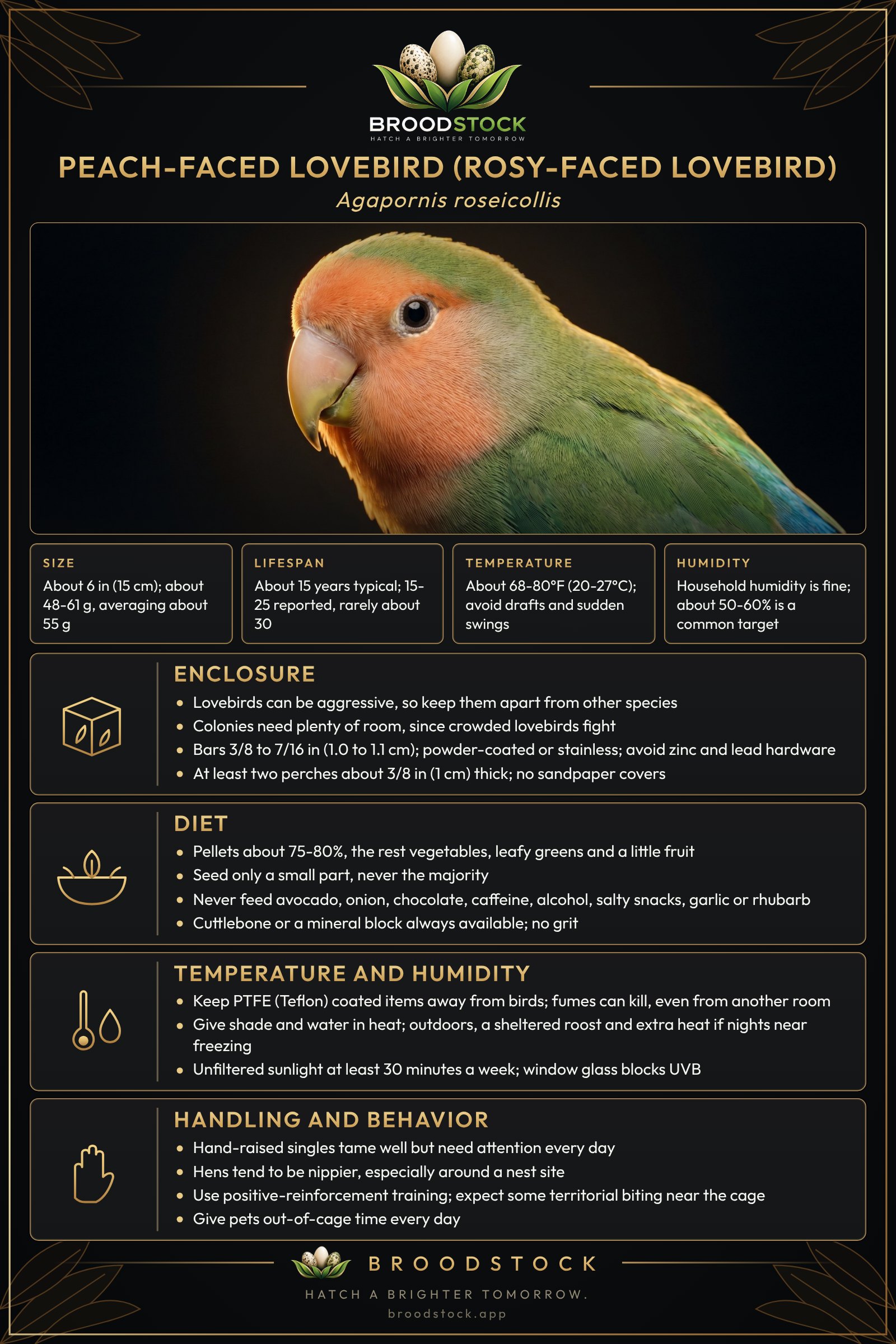
Print it or save it
The care sheet is a one-page summary you can print or keep on your phone. The full care text is below.
Keeping Peach-faced Lovebird? Broodstock tracks feeding, weights, sheds, enclosures and equipment for every animal you keep, and it is free to start.
Scientific name
Agapornis roseicollis
Adult size
These birds are about 6 in (15 cm) long. Weight for this species runs about 48-61 g, averaging about 55 g, within a general lovebird range of 45-70 g. Hens tend to be a little heavier.
Lifespan
With good care, about 15 years is typical in captivity. Reports range from 15-25 years, and a rare bird reaches about 30.
Enclosure
Space the bars about 3/8 to 7/16 in (1.0 to 1.1 cm) apart. Include at least two perches about 3/8 in (1 cm) thick along with varied natural branches, and do not use sandpaper perch covers. Powder-coated or stainless cages are the right choice. Avoid zinc (galvanized) or lead (old paint) hardware.
Lovebirds can be aggressive, so keep them apart from other species. Colonies, which are more common with Fischer's, call for nest boxes numbering at least double the pairs and lots of space, because crowded lovebirds fight. Pets need daily time out of the cage.
Temperature
About 68-80°F (20-27°C) indoors is comfortable. Healthy adults tolerate some heat and cold, but avoid drafts and sudden swings. Wild birds come from hot, arid country near water, so give shade and water in heat. The lowest safe outdoor aviary temperature is not well documented by vets or societies. Provide a sheltered, draft-free roosting area, and supplemental heat if nights approach freezing.
Humidity
Little is documented for lovebirds. Normal household humidity is fine, and about 50-60% is a common target in breeding rooms. In dry climates, give the hen a shallow bath dish. Frequent baths or showers help feather and skin health.
UVB
UVB is recommended. The best source is direct, unfiltered sunlight (window glass blocks UVB) for at least 30 minutes a week, more if possible, with shade available. Indoors, a full-spectrum bird bulb (CRI 91 or higher) helps. Hold it at least about 18 in (45 cm) from the bird and replace it about every 6 months as output fades. A bulb does not fully replace sunlight, and birds without UV need dietary vitamin D3 from a pelleted diet.
Lighting
Outside breeding, give about 10-12 hours of light and 12 hours of uninterrupted darkness. Cut a hen to about 10 hours and take away the nest box and nest material when you want her to stop or rest. Hormones, excess laying and heavy molts are all driven by long days.
Heating
Keep the room draft-free at 68-80°F (20-27°C). Heat lamps, heaters and appliances with a PTFE (Teflon) non-stick coating must never be used near birds. Fumes from overheated PTFE can kill before any signs appear, even when the bird is in another room.
Diet
Feed a pellet-based diet: pellets make up about 75-80%, with vegetables, leafy greens and a little fruit for the rest. Seed should be only a small part and never the majority, since seed-only diets lack calcium, vitamin A and protein. Give fresh water daily. Dairy is fine only in small amounts.
Never feed avocado, onion, chocolate, caffeine (coffee, tea, soda), alcohol or salty snacks. Garlic and rhubarb are also toxic to parrots.
Supplements
Keep cuttlebone or a mineral block available at all times, especially for laying hens, and ask your avian vet about extra calcium during egg-laying. Vitamin D3 is needed to use calcium and comes from sunlight or a pelleted diet, so indoor birds without UV should eat pellets. Excess D3 is harmful, so add a separate supplement only on your vet's advice.
Lovebirds on seed diets are prone to vitamin A deficiency; correct it with pellets and orange or dark green vegetables. Grit is unnecessary because lovebirds hull seed, and it can cause impaction if over-eaten. Use powdered vitamins only during a seed-to-pellet switch; on pellets, extra vitamins are usually not needed.
Shedding
Little is documented for this species. Birds typically molt once or twice a year, often after breeding or as day length changes, and indoor birds may molt a little all year.
Handling
Hand-raised single birds tame well but need attention every day; a few weeks of neglect can make them snappish again. Pairs often bond with each other more than with their owner. Hens tend to be nippier and more argumentative, especially near a nest site. Train with positive reinforcement, and expect some territorial biting around the cage.
Health signs to watch
Get an avian vet urgently if a hen sits fluffed on the cage floor, strains, bobs her tail or has a swollen abdomen. This is egg binding; lovebirds are a high-risk species, and hens can bind without a mate. Labored breathing, wobbling or sudden collapse may mean PTFE fumes.
Other things to watch for: chlamydiosis (psittacosis, which can infect people); PBFD (feather and beak abnormalities); avian polyomavirus (avoid keeping lovebirds where other parrot species are being bred); avian paramyxovirus group 3 (reported mostly in lovebirds, and can cause sudden death or neurological signs such as head tilt); lovebird eye disease (a severe, often fatal Agapornis condition); avian gastric yeast (megabacteria); giardiasis; poxvirus; vitamin A and calcium deficiency from seed diets; obesity; self-mutilation and feather plucking.
Quarantine new birds.
Welfare
The mutation range in this species is the widest in the genus (lutino, turquoise, opaline, whiteface, etc.). No specific health problems tied to individual lovebird mutations have been confirmed in the material available.
Keep every animal's care in one place
Log feedings, weights and sheds, set reminders, and let Ranger, the built-in AI manager, help with the rest. Free to start, no card needed.