
Broodstock / Care sheets / Ringneck Dove
Ringneck Dove Care Sheet
Streptopelia risoria (domestic form of the African Collared Dove, Streptopelia roseogrisea; also called Barbary or Ring Dove)
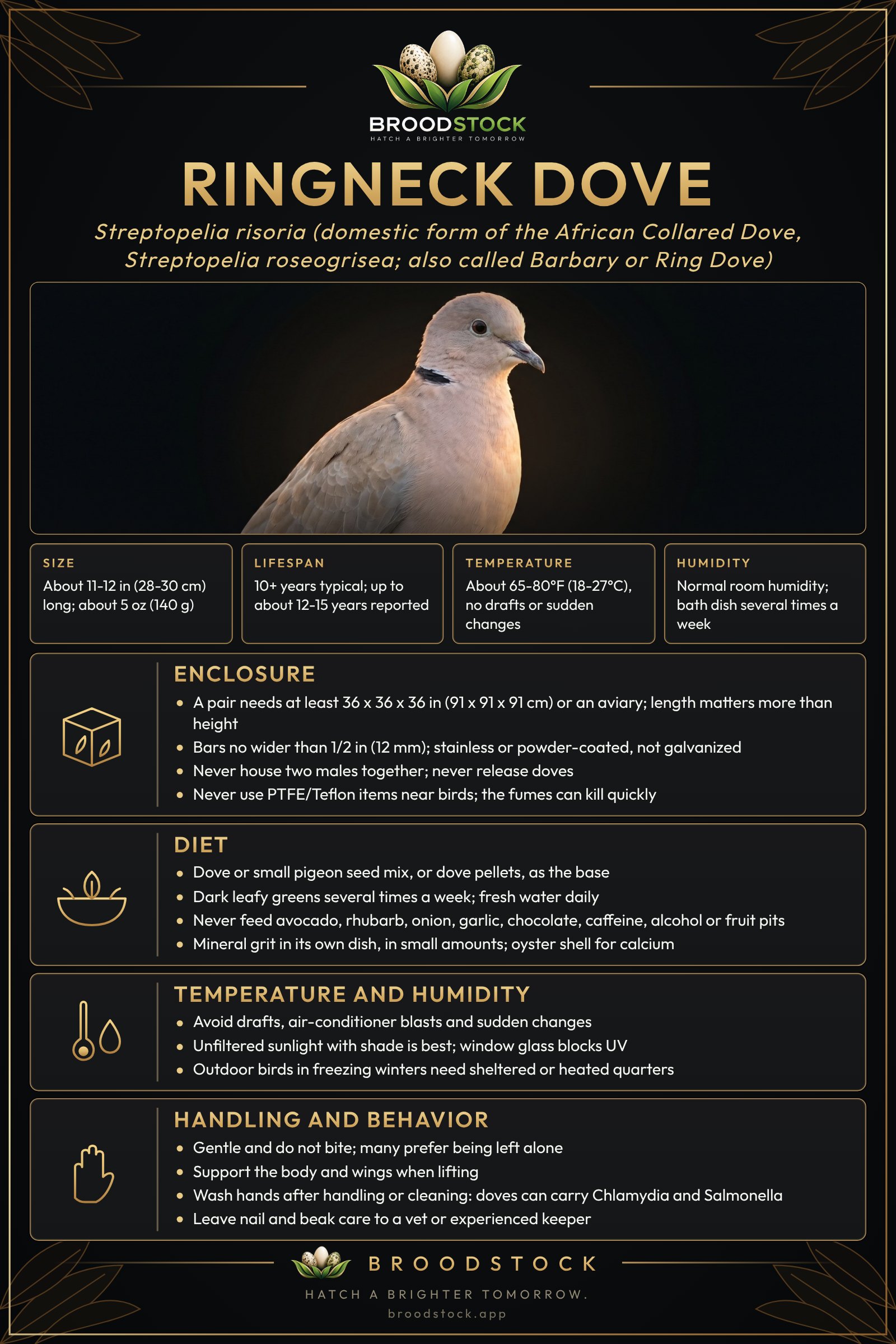
Print it or save it
The care sheet is a one-page summary you can print or keep on your phone. The full care text is below.
Keeping Ringneck Dove? Broodstock tracks feeding, weights, sheds, enclosures and equipment for every animal you keep, and it is free to start.
Scientific name
Streptopelia risoria, the domestic form of the African Collared Dove (Streptopelia roseogrisea). Other names are Barbary Dove and Ring Dove.
Adult size
Length is roughly 11-12 in (28-30 cm), and weight is around 5 oz (140 g).
Lifespan
10+ years is typical with good care, and reports go as high as about 12-15 years.
Enclosure
Doves fly instead of climbing, so floor area and length count for more than height. For a pair, the minimum is about 36 x 36 x 36 in (91 x 91 x 91 cm), or an aviary; larger is better. Bars should be no more than about 1/2 in (12 mm) apart, and the wire should be stainless or powder-coated (avoid galvanized wire). Offer perches in several sizes, with the thinnest at least 3/4 in (19 mm), and add flat shelves.
House a male with a female, or two females. Never house two males together. Several pairs require a very large aviary.
Never release doves. They survive poorly in the wild, and escapes have started feral populations.
Never have anything with a PTFE/Teflon coating near birds: irons, heaters, non-stick pans and some heat lamps. A self-cleaning oven cycle is just as dangerous. The fumes can kill birds fast, even when released in a different room.
Temperature
Doves are comfortable at about 65-80°F (18-27°C). Keep them out of drafts and air-conditioner blasts, and avoid sudden changes. Birds kept outdoors where winters freeze need sheltered or heated quarters.
Humidity
Normal room humidity is fine. Give a wide, shallow bath dish several times a week, or spray lightly with lukewarm water.
UVB
The best choice is unfiltered natural sunlight, with supervised time outdoors in a secure cage that has shade. UV does not pass through window glass. Some vet sources suggest a full-spectrum/UVB bird lamp 12-18 in (30-46 cm) from the perch for 10-12 hours a day, replaced about every 6 months. Evidence from avian vets on UVB lamps is mixed, and keepers differ in what they do. Whatever you choose, make sure the diet supplies vitamin D3.
Lighting
Give about 10-14 hours of light a day on a steady day and night cycle.
Heating
Never use heat sources with a PTFE/Teflon coating (irons, heaters, non-stick pans, some heat lamps) near birds, because the fumes kill small birds fast.
Diet
Seed goes down whole in doves. Feed a base of dove or small pigeon seed mix (parakeet-size seed plus larger grains such as cracked corn, oat groats and safflower) or dove pellets. Vet sources differ on how much of the diet should be pellets versus seed, so practices vary.
Add chopped dark leafy greens several times a week. Provide fresh water every day.
Never feed avocado, rhubarb, onion, garlic, fruit pits, apple seeds, chocolate, caffeine, alcohol, or salty, fatty or spoiled food.
Supplements
Doves do not hull seed, so grit is essential. Offer insoluble mineral grit in a separate dish, in small amounts, since too much can cause blockage. Provide oyster shell or another calcium source, especially for laying hens. A balanced diet usually makes vitamin supplements unnecessary; check with an avian vet before adding any.
Shedding
Squabs molt into adult plumage during their first months. Adults molt once a year. Feather loss at other times suggests mites, plucking by a mate, or illness.
Handling
These doves are gentle and do not bite. Hand-raised birds especially can be tamed, but many prefer being left alone. When lifting, support the body and wings. Have a vet or experienced keeper do nail and beak care.
Health signs to watch
See an avian vet for: cheesy yellow growths in the mouth or throat, swelling or drooling (canker, trichomonas, can be fatal); a fluffed bird sitting on the floor; noisy breathing or discharge; diarrhea or stained vent feathers; wart-like lumps or growths (pox); and weight loss (worms, more common outdoors). Red mites hide by day and feed at night, so inspect perches and crevices. Doves can carry Chlamydia (psittacosis) and Salmonella, so wash your hands after handling birds or cleaning. PTFE fume exposure can be followed by sudden death.
Welfare
Never release unwanted doves. Domestic birds survive poorly, and escapes have formed feral populations in places like New Zealand. Children who want a pet to hold are not well matched with doves.
Legal note: California's Fish and Game Code § 3500 lists doves of the genus Streptopelia, which includes the ringneck dove, as resident game birds, so a state game breeder license may be needed to breed or sell them there. Other states may also treat doves as game birds. Check with your state wildlife agency before breeding or selling, and check the buyer's state before shipping.
Keep every animal's care in one place
Log feedings, weights and sheds, set reminders, and let Ranger, the built-in AI manager, help with the rest. Free to start, no card needed.