
Broodstock / Care sheets / Rosella
Rosella Care Sheet
Platycercus eximius (Eastern rosella); subspecies include eximius, elecica (golden-mantled) and diemenensis
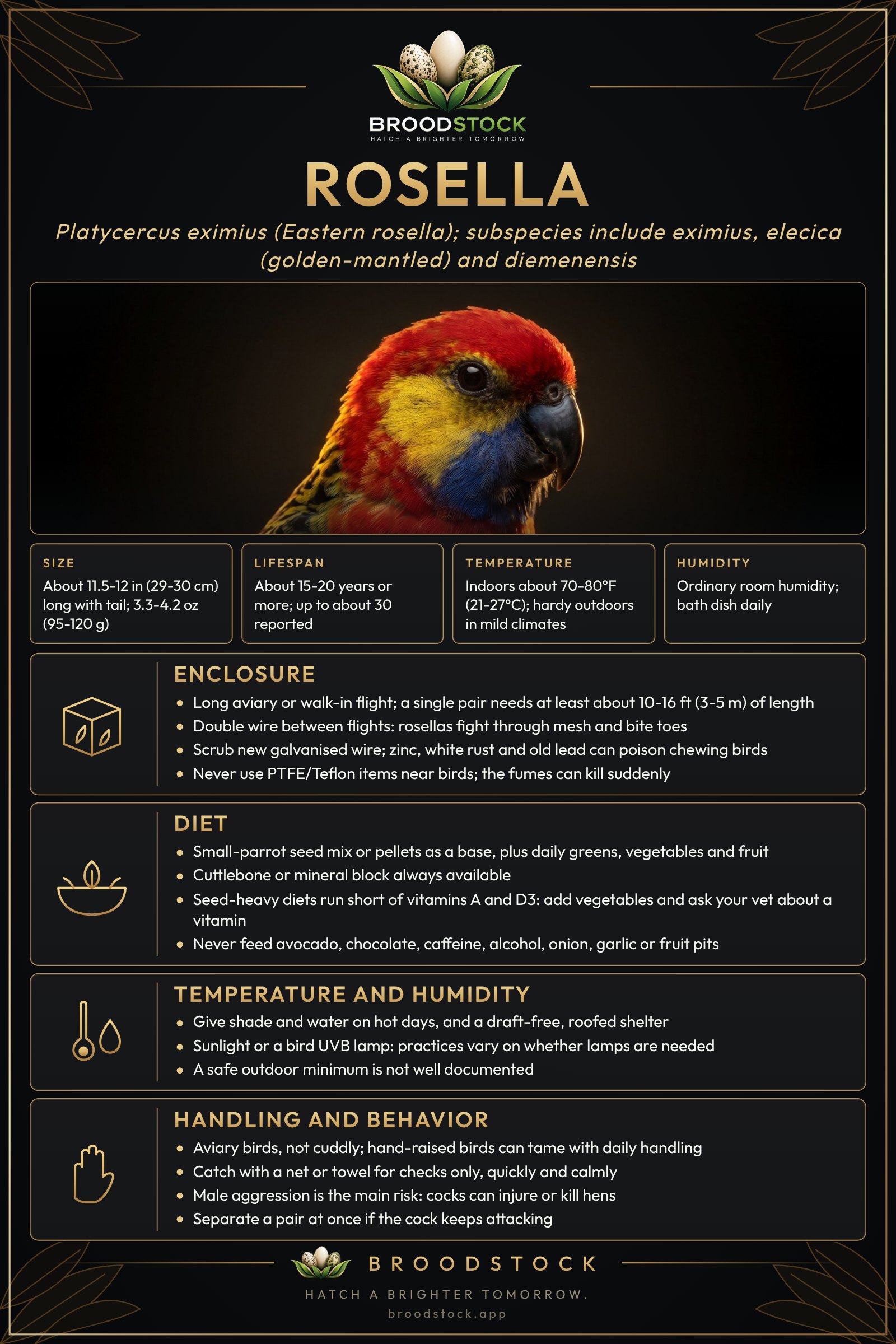
Print it or save it
The care sheet is a one-page summary you can print or keep on your phone. The full care text is below.
Keeping Rosella? Broodstock tracks feeding, weights, sheds, enclosures and equipment for every animal you keep, and it is free to start.
Scientific name
Platycercus eximius (Eastern rosella). Subspecies include eximius, elecica (golden-mantled) and diemenensis.
Adult size
Length is about 11.5-12 in (29-30 cm), tail included, and weight is about 3.3-4.2 oz (95-120 g).
Lifespan
Typically 15-20 years or longer; with good care, reports reach about 30 years.
Enclosure
Rosellas are strong flyers and do best in a long aviary or walk-in flight. Specialist guidance calls for a single-pair aviary at least about 10-16 ft (3-5 m) long. Put a roof over the flight, since a full roof keeps the floor dry, and include a sheltered end. Indoors, use the biggest cage you can manage and allow free-flight time. Provide a bath dish daily.
Keep pairs out of sight of other rosellas, with double wire between flights, because rosellas fight through mesh and bite toes.
Choose stainless steel, safe powder coat or well-scrubbed mesh. New galvanised (zinc-coated) wire, 'white rust', and old lead solder or paint can poison birds that chew on them. Scrub new mesh with a wire brush and dilute vinegar, rinse it well before birds go in, and repeat if white rust forms.
Keep birds away from kitchen fumes. Never have anything with a PTFE/Teflon coating nearby, such as non-stick pans, irons, heaters and some heat lamps. The fumes can kill birds suddenly, even from another room.
Temperature
Rosellas are hardy in sheltered outdoor aviaries in mild climates. Inside the house, ordinary room temperatures of about 70-80°F (21-27°C) are right for them. Give shade and water on hot days, plus a draft-free, roofed shelter. A safe minimum for outdoors is not well documented.
Humidity
Rosellas need no special humidity beyond what the room or outdoors provides. They bathe often, so give a shallow bath dish every day.
UVB
Little is documented about rosellas in particular. Aviary birds outdoors get natural sunlight. For indoor birds, common avian vet advice is unfiltered sun (glass blocks UVB) or a bird-specific full-spectrum/UVB lamp used at the maker's distance on the normal day cycle. Keepers differ on whether lamps are needed at all.
Heating
If you add heat, use a thermostat-controlled source, and never put PTFE (Teflon)-coated heaters, heat lamps or appliances near birds.
Diet
A base of small-parrot seed mix (canary, millets, oats, some safflower, limited sunflower and hemp) or pellets works well, with daily greens, vegetables and fruit, plus sprouted seed and cooked pulses. In the wild, rosellas eat grass and tree seeds, fruit, blossom and some insects. Never feed avocado, chocolate, caffeine, alcohol, onion, garlic, fruit pits, apple seeds, or salty, fatty or sugary human food.
Supplements
Keep cuttlebone or a mineral block available at all times, and give laying hens extra calcium. Seed-heavy diets run short of vitamin A and D3, so add vegetables, and give indoor seed-fed birds a balanced avian vitamin as your vet advises. Birds eating pellets usually need no extra vitamins.
Shedding
Rosellas molt, usually once a year after breeding. Young birds look duller, like hens, and gain full adult color after their first adult molt. Exactly when this happens is not well documented.
Handling
Rosellas are usually kept as aviary birds and are not cuddly, though hand-raised birds can become tame with steady daily handling. For checks only, catch them with a net or towel, working quickly and calmly.
Health signs to watch
Intestinal worms are common in aviary birds because rosellas forage on the floor, so keep to a strict worming and floor-cleaning routine. Also watch for bacterial and fungal infections, psittacosis (Chlamydia, which can infect people), egg binding, toe and beak injuries from fights through the wire, and fledglings crashing into aviary mesh. PTFE (Teflon) fume poisoning can show up as sudden breathing trouble or collapse. A fluffed, quiet bird, or a hen straining on the floor, needs an avian vet promptly.
Welfare
Male aggression is the main welfare risk. Cocks can injure or kill hens, especially in small flights or poorly bonded pairs. Bring birds together slowly, starting in side-by-side cages. The hen needs space and cover to get away. If the cock keeps attacking, split the pair immediately.
Escaped birds have set up wild populations in New Zealand, where they compete with native hollow-nesters. Keep aviaries secure, never release birds, and check local rules before importing or keeping them. They are on CITES Appendix II.
Keep every animal's care in one place
Log feedings, weights and sheds, set reminders, and let Ranger, the built-in AI manager, help with the rest. Free to start, no card needed.