
Broodstock / Care sheets / Springtails
Springtails Care Sheet
Class Collembola (about 9,600 described species)
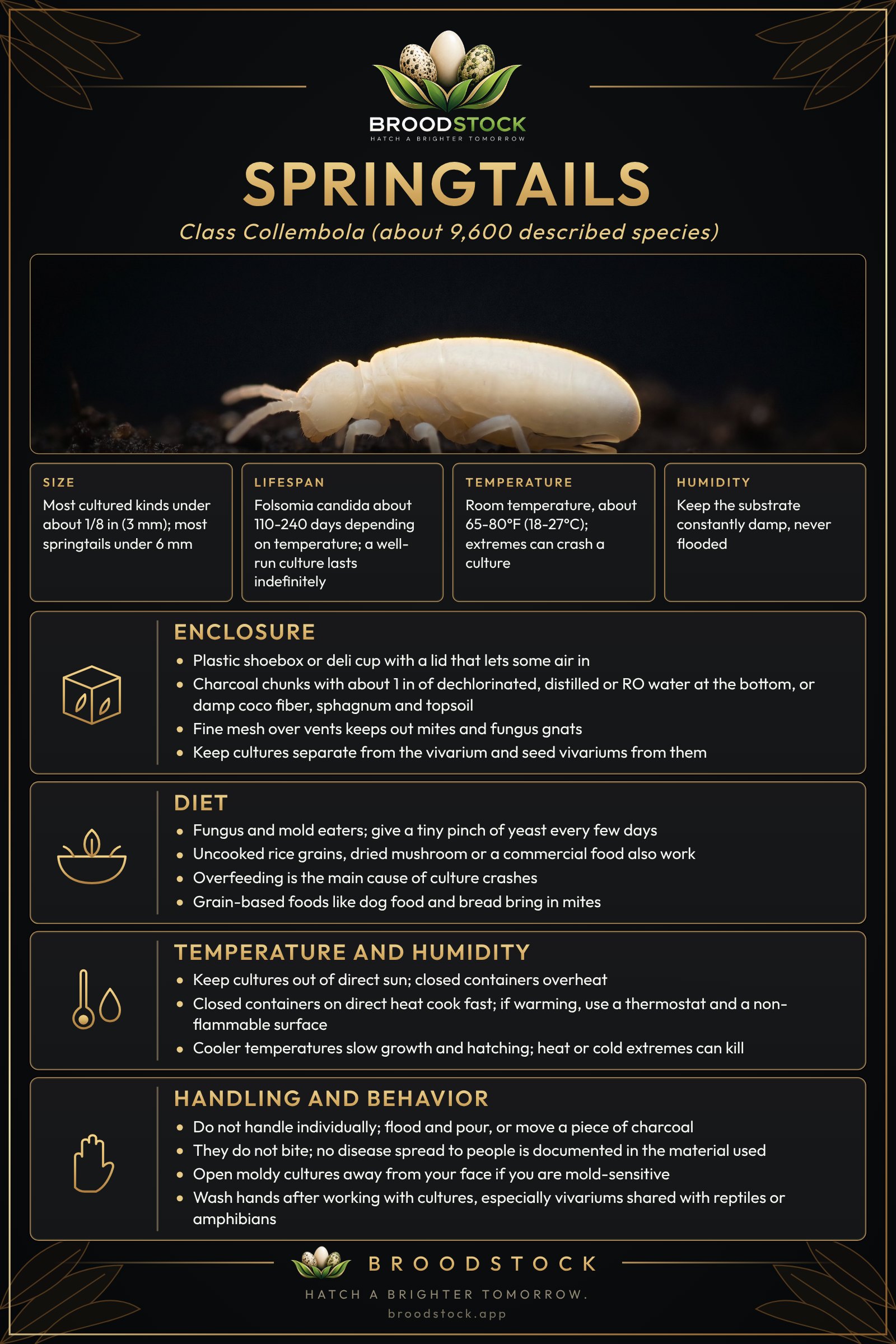
Print it or save it
The care sheet is a one-page summary you can print or keep on your phone. The full care text is below.
Keeping Springtails? Broodstock tracks feeding, weights, sheds, enclosures and equipment for every animal you keep, and it is free to start.
Scientific name
Class Collembola, with about 9,600 described species. They are six-legged hexapods, not insects. The usual hobby 'temperate white' springtail is Folsomia candida, while tropical and colored cultures are sold under various names and are often not identified to species.
Adult size
Tiny: most cultured kinds are under about 1/8 in (3 mm), and Folsomia candida tops out near 3 mm. Across the group, most species stay below 6 mm.
Lifespan
Depending on temperature, an individual Folsomia candida survives roughly 110-240 days. Overlapping generations let a well-run culture continue indefinitely, and lab strains have been kept for years.
Enclosure
A deli cup or plastic shoebox works for a culture. The lid should let some air in rather than seal completely: cover small holes with fine mesh or poly-fil, or just lift the lid briefly every day or two.
Two substrates are common. One is washed horticultural charcoal chunks, about 1/2 in pieces piled several inches deep, with about 1 in of RO, distilled or dechlorinated water at the bottom to keep it wet. The other is a damp blend of coco fiber, sphagnum moss and organic topsoil.
Keep cultures in their own containers outside the vivarium, and seed vivariums from them. Fine mesh over the vents keeps out mites and fungus gnats and keeps springtails in.
Temperature
Room temperature, about 65-80°F (18-27°C), suits temperate cultures, and extremes can crash a culture. Folsomia candida eggs take about a week to hatch at 70°F (21°C), and development slows when it is cooler. Tropical cultures are usually kept at the warmer end, and their exact needs vary by species and are not well documented.
Humidity
Moisture matters most. Springtails breathe through their skin and dry out fast, so keep the substrate damp all the time, never flooded, and check it often. Use RO, distilled or dechlorinated water.
UVB
UVB is not needed. These are soil animals, living in darkness and avoiding light.
Lighting
No special lighting is needed. Keep cultures out of direct sun, which overheats closed containers; room light or darkness are both fine.
Heating
At room temperature, heat is usually unnecessary. In a cold room, move cultures somewhere warmer or beside (not on) a heat mat run through a thermostat, since closed containers on direct heat cook fast and dry out. For fire safety, use a thermostat and set heat mats on non-flammable surfaces.
Diet
Springtails feed mostly on fungus and mold, plus rotting plant matter. Classic culture foods include a tiny pinch of nutritional or brewer's yeast every few days, a few grains of uncooked rice (which grow mold for them), dried mushroom, or a commercial springtail food. Feed sparingly, because overfeeding is the main cause of culture crashes through runaway mold and mites. Grain-based foods such as dog food and bread are known to bring in mites.
Water comes from the damp substrate. Springtails are not at risk of drowning from substrate water, and flooding is how they are harvested, since they float. Keep the culture damp but not flooded.
Supplements
They are generally not gut-loaded, being too small to load usefully. They serve as a supplemental snack for tiny frogs, froglets and other very small insect eaters. For calcium, rely on the main feeder insects, dusted as usual.
Shedding
Springtails molt throughout life (Folsomia candida about 45 times, becoming mature after about 5 molts). While molting they are vulnerable, so they hide in damp spots.
Handling
Do not handle them one by one. Move them by flooding and pouring, or by shifting a piece of charcoal or substrate into the new container. Springtails do not bite and are not known to parasitize people, although their scales or hairs can irritate skin if rubbed. No disease spread from springtails to people is documented in the material used.
Moldy cultures release spores, so open them away from your face if you are mold-sensitive. Wash your hands after working with cultures and vivariums, especially those shared with reptiles or amphibians, which can carry salmonella.
Brumation
Cultures need no diapause. Cooler temperatures slow growth and egg hatching, so a slightly cool room can slow a culture, but cold or heat extremes can kill it. How well species tolerate cold varies a lot, and hobby cultures are not well documented on this.
Health signs to watch
Culture crashes usually trace to overfeeding (mold takes over or goes sour), drying out, flooding or temperature extremes. Pest mites often come with overfeeding or grain foods, and a heavily infested culture is usually best discarded and restarted from clean stock. Damp cultures can become breeding sites for fungus gnats, and mesh over the vents helps. Some mold is normal food, but slimy, foul-smelling or fuzzy mats covering everything mean too much food. Run several cultures so one crash does not leave you with none.
Welfare
Folsomia candida and many cultured springtails are already widespread worldwide in soil and plant pots, so escapees are low risk. Still, never dump cultures outdoors, especially tropical cultures of unknown species. No US federal or state permit requirements for keeping springtails have been identified; if you import or ship across borders, check the local rules. Springtails are fed live and are harmless to the animals that eat them, and any that go uneaten join the vivarium cleanup crew.
Keep every animal's care in one place
Log feedings, weights and sheds, set reminders, and let Ranger, the built-in AI manager, help with the rest. Free to start, no card needed.