
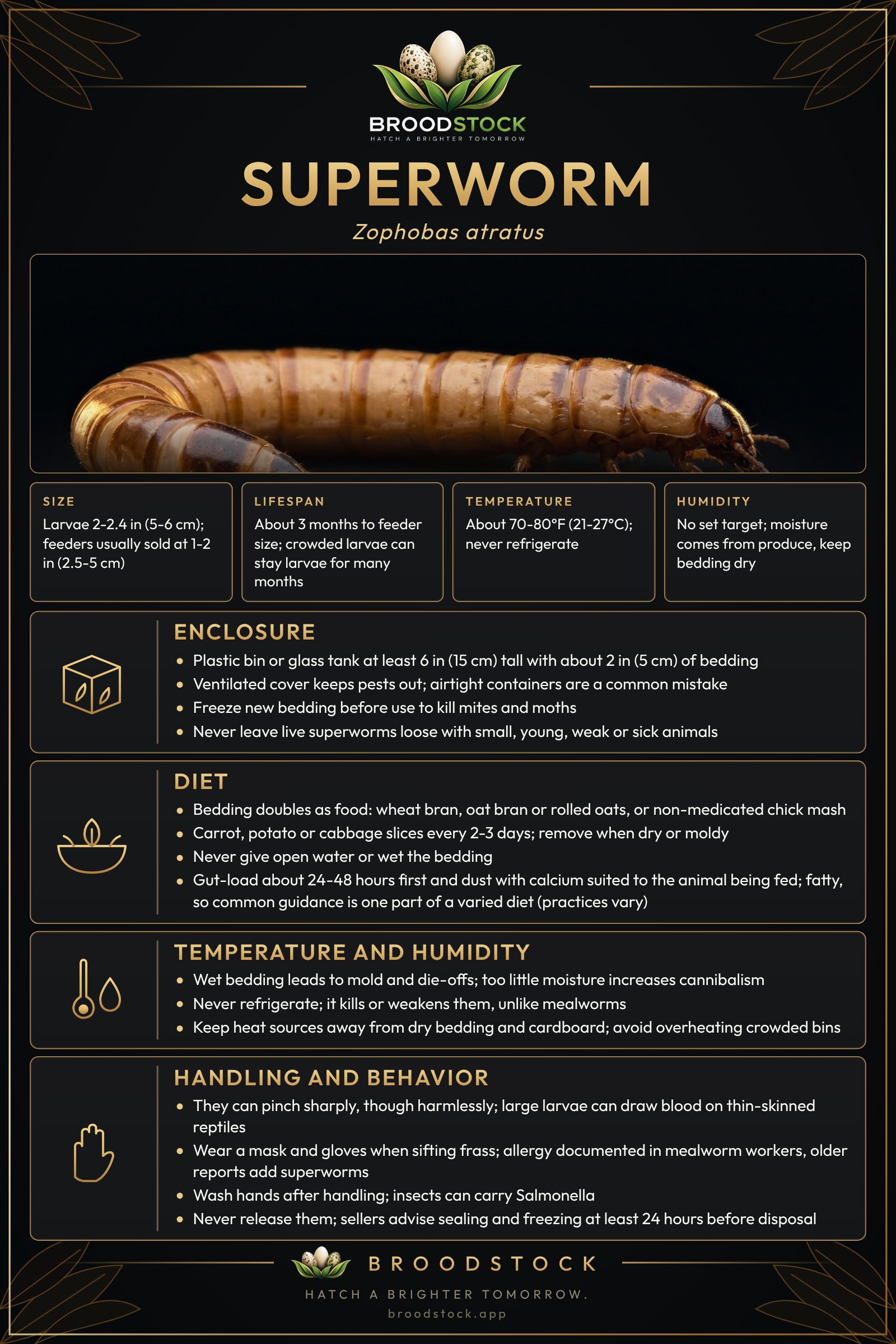
Print it or save it
The care sheet is a one-page summary you can print or keep on your phone. The full care text is below.
Keeping Superworm? Broodstock tracks feeding, weights, sheds, enclosures and equipment for every animal you keep, and it is free to start.
Scientific name
Zophobas atratus is the accepted name today. Zophobas morio is a later synonym that is still widely used by hobbyists, sellers and USDA. This is a large darkling beetle from tropical Central and South America. Superworms are their own species, not mealworms treated with hormones.
Adult size
Larvae grow to about 2-2.4 in (5-6 cm), and feeders are usually sold at 1-2 in (2.5-5 cm). The beetles are large and black, but their size is not well documented.
Lifespan
Growth from hatching to feeder size takes about 3 months. Larvae kept crowded can remain larvae for many months (up to about 18 months in one study) and end up heavier than isolated ones. Once isolated, a full-grown larva pupates in about 2 weeks and becomes a beetle about 2 weeks after that. How long the beetles live is not well documented.
Enclosure
Use plastic bins (storage tubs or similar) at least 6 in (15 cm) tall, or a glass tank, with about 2 in (5 cm) of bedding. For 100 or more worms, choose a container of at least 5-10 gallons (19-38 L).
Superworms climb smooth walls poorly, but a ventilated cover (for example a cutout covered in screen) keeps pests out. Airtight containers are a common mistake. Before using fresh bedding, freeze it so mites and moths die.
Temperature
Hold them at about 70-80°F (21-27°C); around 77-78°F (25-26°C) is a common target for growth. Never refrigerate superworms. Unlike mealworms they do not go dormant in the cold, and refrigeration kills or weakens them. Keeping feeders at room temperature in a crowded bin is enough, because crowding stops them pupating.
Humidity
No specific humidity target is given. Produce supplies the moisture. Wet bedding leads to fermentation, mold and die-offs, while too little moisture increases cannibalism.
UVB
No UVB is needed. Superworms live buried in bedding, and UV lighting is not part of their care.
Lighting
Keep the colony somewhere dim and out of direct sun. Larvae set aside to pupate belong in the dark, for example in a closed box.
Heating
In a cold room, run a reptile heat mat or heat cable under or beside part of the bin, on a thermostat, and check the bin with a thermometer. Avoid overheating crowded bins, and keep heat sources away from dry bedding and cardboard.
Diet
The bedding doubles as food: wheat bran, oat bran or rolled oats, non-medicated chick mash, or a commercial insect gut-load powder. For moisture, offer slices of carrot, potato, cabbage or cauliflower leaves, or broccoli stems every 2-3 days, and take out pieces once they dry or mold. Organic or washed produce avoids pesticide residue. Open water and damp bedding should never be offered.
Supplements
Gut-load superworms for about 24-48 hours before feeding them off, using greens, carrot or a commercial gut-load diet, and dust them with calcium suited to the animal being fed.
Superworms are fatty (published as-fed analyses put fat at about 14-18%), with a low calcium to phosphorus ratio and a tough exoskeleton. Common guidance is to use them as one part of a varied diet rather than the only food, and to feed fewer to overweight animals. Some keepers use them as a main food for large insectivores, so practices vary.
Shedding
Larvae molt repeatedly as they grow. A freshly molted worm is briefly white and soft, which is normal. An isolated larva about to pupate spends a few days curled into a stiff C shape (prepupa).
Handling
A superworm can give a sharp but harmless pinch with its jaws. People who work with closely related mealworms are documented to develop insect allergy (asthma, itchy eyes, runny nose), and older reports include superworms. Wear a dust mask and gloves when sifting frass from large colonies, and work in a ventilated area.
Insects can carry Salmonella from contaminated feed or bedding, so wash your hands after handling them.
Brumation
This does not apply. Superworms cannot be stored cool, and refrigeration kills or weakens them. To slow how fast you use them up, keep them crowded at room temperature, which holds them in the larval stage. Without food, larvae can last 1-2 weeks.
Health signs to watch
When worms die off, the cause is usually damp bedding (fermentation, mold, bacterial growth), excess heat, or a lack of moisture. Promptly remove uneaten produce and dead worms (they go dark and smell), and refresh bedding once it is mostly frass.
Grain mites can infest bran. Freezing new bedding and keeping it dry helps. Thirsty superworms eat one another, and both larvae and beetles eat pupae, so pupae get isolated.
Welfare
Biting is part of what superworms do. Large larvae can bruise thin-skinned reptiles or draw blood, so feed them only to animals big enough to handle them, offer them in a smooth dish or with soft-tipped tongs, and never leave live superworms loose in an enclosure with small, young, weak or sick animals. Some keepers crush the head first for small animals and birds. Stories of superworms eating their way out of a reptile's stomach are not supported; the animals most likely died of something else first.
This is a tropical species, so never release live larvae or beetles. Sellers recommend sealing unwanted ones in a container and freezing them at least 24 hours before throwing them out.
In the US, USDA APHIS does not allow superworm imports, but domestically raised Zophobas morio need no plant pest permit for interstate movement within the contiguous states. That exception does not cover Alaska, Hawaii or US territories. Some states have restricted Zophobas in the past (Florida denied import permits for it in the 1990s), so check with your state agriculture department before buying or shipping.
Keep every animal's care in one place
Log feedings, weights and sheds, set reminders, and let Ranger, the built-in AI manager, help with the rest. Free to start, no card needed.