
Broodstock / Care sheets / Waxworm
Waxworm Care Sheet
Galleria mellonella (greater wax moth), a snout moth (Pyralidae)
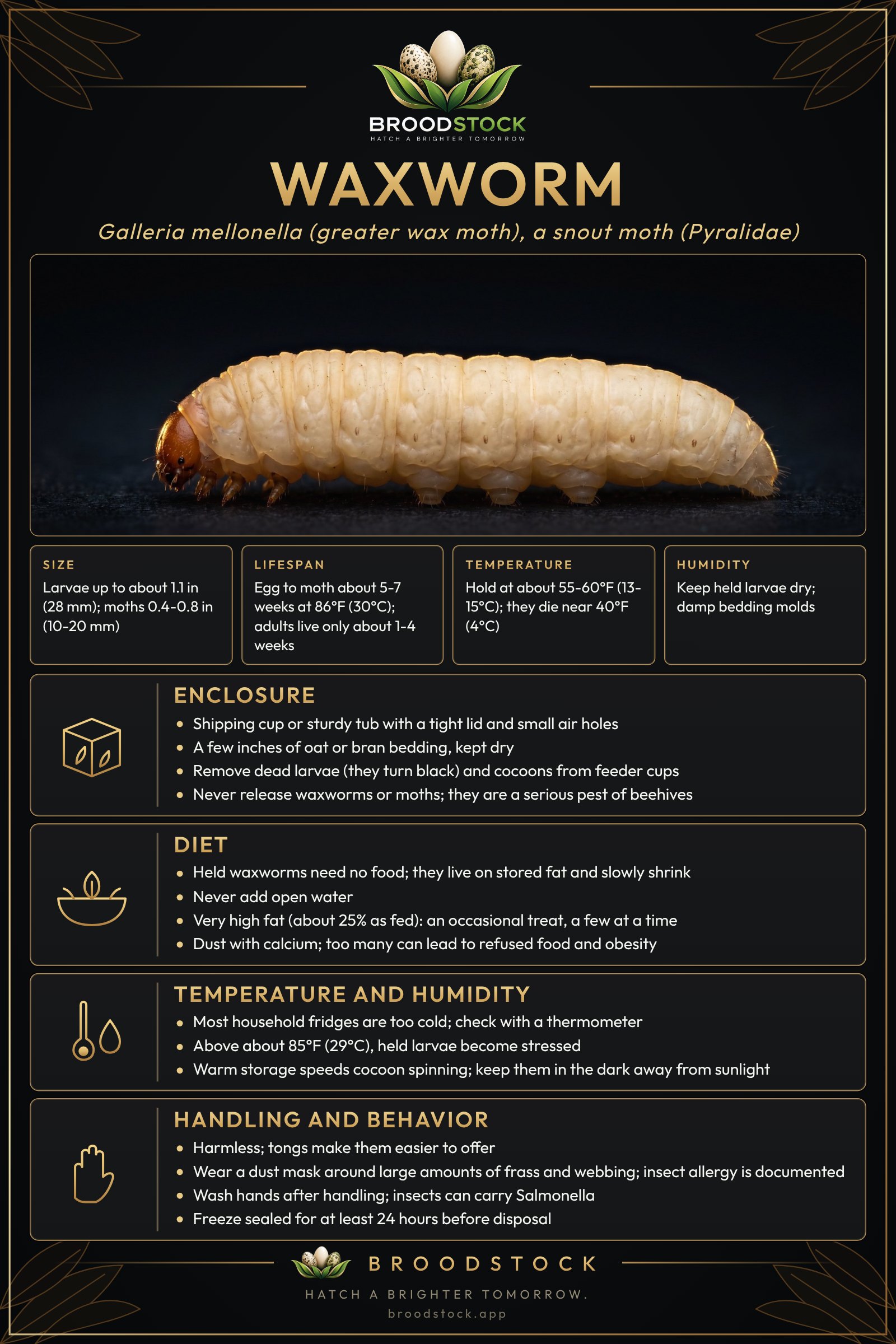
Print it or save it
The care sheet is a one-page summary you can print or keep on your phone. The full care text is below.
Keeping Waxworm? Broodstock tracks feeding, weights, sheds, enclosures and equipment for every animal you keep, and it is free to start.
Scientific name
Galleria mellonella (greater wax moth) is a snout moth (Pyralidae). Waxworms sold in the trade also include the lesser wax moth (Achroia grisella). In the wild, the larvae live in honey bee nests and eat comb, pollen and shed bee skins.
Adult size
A larva has a cream body, black-tipped legs and a small dark head. At about 15 days old it measures roughly 0.5 in (13-14 mm), and a full-grown one tops out near 1.1 in (28 mm). The moth is grey-brown, 0.4-0.8 in (10-20 mm) in body length, and spreads about 1.2-1.6 in (30-41 mm) across the wings.
Lifespan
Development from egg to adult moth takes about 5-7 weeks at 86°F (30°C) on a good diet (about 37 days in one lab study). Adults emerge 5-6 days after pupation in warm lab colonies, up to about 2 weeks in warm conditions and much longer when cool. They live only about 1-4 weeks, since they do not feed. Bought waxworms held cool last several weeks, while at room temperature they spin cocoons within about 1-2 weeks.
Enclosure
To hold them, keep them in the cup they shipped in, or move them to a sturdy plastic tub with a snug lid pierced by small air holes and a few inches of oat or bran bedding. Dryness matters; should the bedding turn damp, take the lid off for a while. Regularly clear out waste, dead larvae and old bedding.
Temperature
A holding temperature of about 55-60°F (13-15°C) leaves them dormant for several weeks. Most household fridges run too cold, though the door shelf (their warmest spot), a wine cooler or a cool basement may do. Confirm with a thermometer: they die at around 40°F (4°C), so room temperature is the safer error. Larvae being held get stressed above about 85°F (29°C).
Humidity
Held larvae should be kept dry, since damp bedding molds.
UVB
No UVB is needed. Waxworms live in the dark inside bee nests, and UV lighting is not part of their care.
Lighting
They want darkness. Keep holding cups out of sunlight.
Diet
Held feeders do not need food. They live on stored fat and slowly shrink. Never add open water.
Supplements
Fat makes up about 25% of a waxworm as fed in published analyses, and the calcium to phosphorus ratio is low. Most guidance calls them an occasional treat, given a few at a time once or twice a week to most adult reptiles and dusted with calcium. The fat helps thin or recovering animals gain weight, yet an animal given too many may turn down other food and grow obese.
Shedding
As larvae grow, they molt several times. Fully grown larvae stop eating and spin silk cocoons, often webbing the bedding together. Take cocooned larvae out of feeder cups.
Handling
Waxworms do no harm to handle, and tongs make offering them easier. Allergy to insects is documented among people who work with feeder insects, so put on a dust mask around large amounts of frass and webbing. Afterward, wash your hands: insects may carry Salmonella picked up from contaminated feed.
Brumation
Storing them cool, at about 55-60°F (13-15°C), brings them close to a standstill and holds off cocoon spinning for weeks, whereas warmth hurries the spinning.
Health signs to watch
Dead larvae turn black, and they and any spinning cocoons should come out of feeder cups. Mold grows in damp bedding, and deaths rise with overheating and overcrowding.
Welfare
Greater wax moths do serious damage in beehives, where they tunnel through comb, can kill bee brood and can spread honey bee diseases. Never release waxworms or moths, and keep any colony sealed and away from beehives and stored beekeeping equipment. Sellers recommend sealing unwanted ones in a container and freezing them at least 24 hours before throwing them out.
In the US, Galleria mellonella is on the USDA APHIS list of species that need no plant pest permit for interstate movement within the contiguous states. That exception does not cover Alaska, Hawaii or US territories. Some states with large beekeeping industries may restrict wax moths, so check with your state agriculture department before breeding or shipping.
Keep every animal's care in one place
Log feedings, weights and sheds, set reminders, and let Ranger, the built-in AI manager, help with the rest. Free to start, no card needed.